A teer dream number is a two-digit number that, according to local folklore in Meghalaya, corresponds to something a person saw in a dream. If someone dreams of a river, an animal, a journey, or a familiar face, elders and neighbours might tell them which number that dream “belongs to” in the old dream books. This article is a cultural guide to that tradition. It explains where the idea comes from, how it became part of teer culture, and why it should be read as folklore and entertainment rather than as any kind of prediction. It contains no dream-to-number mappings, no target numbers, and no betting advice of any kind.
The idea of reading meaning into dreams is far older than teer itself. Long before archery grounds and result charts, people in the Khasi Hills told stories about dreams that warned, comforted, or guided. Whether you call it a teer dream number or phrase it as dream number teer, the meaning is the same in local usage. When teer grew into the daily ritual it is today in Shillong, Juwai, and Khanapara, those older dream stories found a new home. This guide walks through that history, the books and charts that carry it, the symbols that appear again and again, and the responsible way to enjoy this colourful corner of Meghalaya’s culture.
What Is a Teer Dream Number
In simple terms, a teer dream number is a number between 0 and 99 that folklore links to a dream image. Teer results are declared as two-digit numbers, from 00 to 99, after each round of archery. Because every possible result fits inside that small range, folk tradition assigns one of those numbers to hundreds of common dream images: people, animals, objects, places, and events. The word “teer” itself means arrow in Hindi, and the game is an archery-based lottery of Meghalaya that is legal and regulated there. You can read a short overview of how the game works on Wikipedia’s teer page, and if you want to see real declared results, you can check the latest teer result on our homepage.
It is important to be clear about what a dream number is and is not. It is a piece of folklore, passed down through conversation, printed booklets, and painted charts. It is not a system for predicting results, and no dream image has any real connection to the number of arrows that will hit a target on a given day. The archers shoot, the arrows are counted, and the last two digits of the count become the result. Dreams do not influence that process in any way.
The Two-Digit World of Teer
Why do dream books use exactly one hundred numbers? The answer is practical, not mystical. Every teer result is a number from 00 to 99, so folklore needed a way to fit the whole universe of dreams into those hundred slots. Over the years, compilers of dream books simply kept assigning images to numbers until the list felt complete. Some books list several hundred dream images, which means many numbers end up “belonging” to more than one image, and some images appear under more than one number in different books.
Folklore, Not a Formula
People sometimes ask whether a dream number is supposed to work like a formula: see this dream, play that number. The honest answer from cultural researchers and from the tradition itself is that dream numbers were never presented as a formula. Older dream books describe themselves as guides to meaning, closer to the dream dictionaries found in many cultures than to any kind of calculation. Dream interpretation across cultures has a long history, and Wikipedia’s article on dream interpretation shows how societies everywhere have tried to find significance in dreams. The teer version is simply Meghalaya’s local expression of that universal human habit.
The Origins of Dream Number Folklore in the Khasi Hills
To understand dream numbers, it helps to know something about the land they come from. Meghalaya, the “abode of clouds,” is home to the Khasi, Jaintia, and Garo peoples, each with rich oral traditions. Stories, proverbs, and sayings were the original libraries of these communities, carried in memory and voice long before they were written down. Dreams had a respected place in that storytelling world. An elder’s dream could be discussed at the morning fire, a strange dream might be taken as a sign to delay a journey, and certain recurring dream images were believed to carry messages.
Dreams in Khasi Oral Tradition
In traditional Khasi belief, the world of the seen and the unseen sit close together. Dreams were treated as visits from that unseen world, and people learned to read them the way they read weather signs in the clouds over the hills. A dream of clear flowing water might be spoken of as a good omen. A dream of a broken tool might prompt someone to check their equipment before a day’s work. None of this had anything to do with gambling. It was a way of paying attention to life, and it belonged to the whole community, not to any game.
Storytellers played a central role. A good storyteller remembered which dream images the old people had called lucky and which they had called unlucky, and those memories travelled from village to village. When teer later became a daily event in towns like Shillong, this existing habit of talking about dreams provided ready-made material. The community already had a shared language of dream symbols; the game simply gave that language a new setting.
From Village Stories to Printed Books
The turning point came when someone began writing the oral lists down. Small printed booklets of dream meanings started appearing in markets, often sold near teer counters and betting shops. These booklets did something the oral tradition had never needed to do: they pinned each dream image to a specific number. A storyteller could say a dream of a tiger was powerful; a booklet had to say which of the hundred numbers the tiger owned.
Different compilers made different choices, and that is why the printed tradition is so varied. A booklet printed in Shillong might assign one number to a dream of rain, while a booklet from another town assigns a different one. Neither is “correct” in any objective sense, because there was never a single original list. There were many storytellers, many memories, and eventually many booklets, each reflecting its compiler’s version of the folklore.

How Dream Numbers Became Part of Teer Culture
Teer itself began as a pastime of archers and grew, over decades, into a government-regulated lottery of Meghalaya. Archery clubs, called teer clubs, organise the shooting, and the results are declared in two rounds each day, known as the first round (FR) and the second round (SR). As the game spread through Shillong, Juwai, Khanapara, and the surrounding towns, it picked up companions: the result charts pinned up at counters, the daily timetable of declarations, and the dream books.
The Morning Conversation
Ask anyone who has spent time around a teer counter and they will describe the same scene. In the morning, before the day’s shooting, people gather and talk. Someone mentions a vivid dream from the night before. Immediately, the conversation turns playful: neighbours offer their opinions about which number the dream points to, someone pulls out a folded dream booklet from a pocket, and a friendly argument begins. This daily ritual is social before it is anything else. It is a reason to gather, to laugh, and to share the small drama of the night’s dreams.
Anthropologists would recognise this as a classic function of folklore. Shared traditions give a community shared topics, shared jokes, and shared references. The dream number conversation does for teer players what discussions of yesterday’s match do for football fans. It binds the group together, and the numbers are almost incidental to the pleasure of the talk.
Dream Books, Charts, and the Market Trade
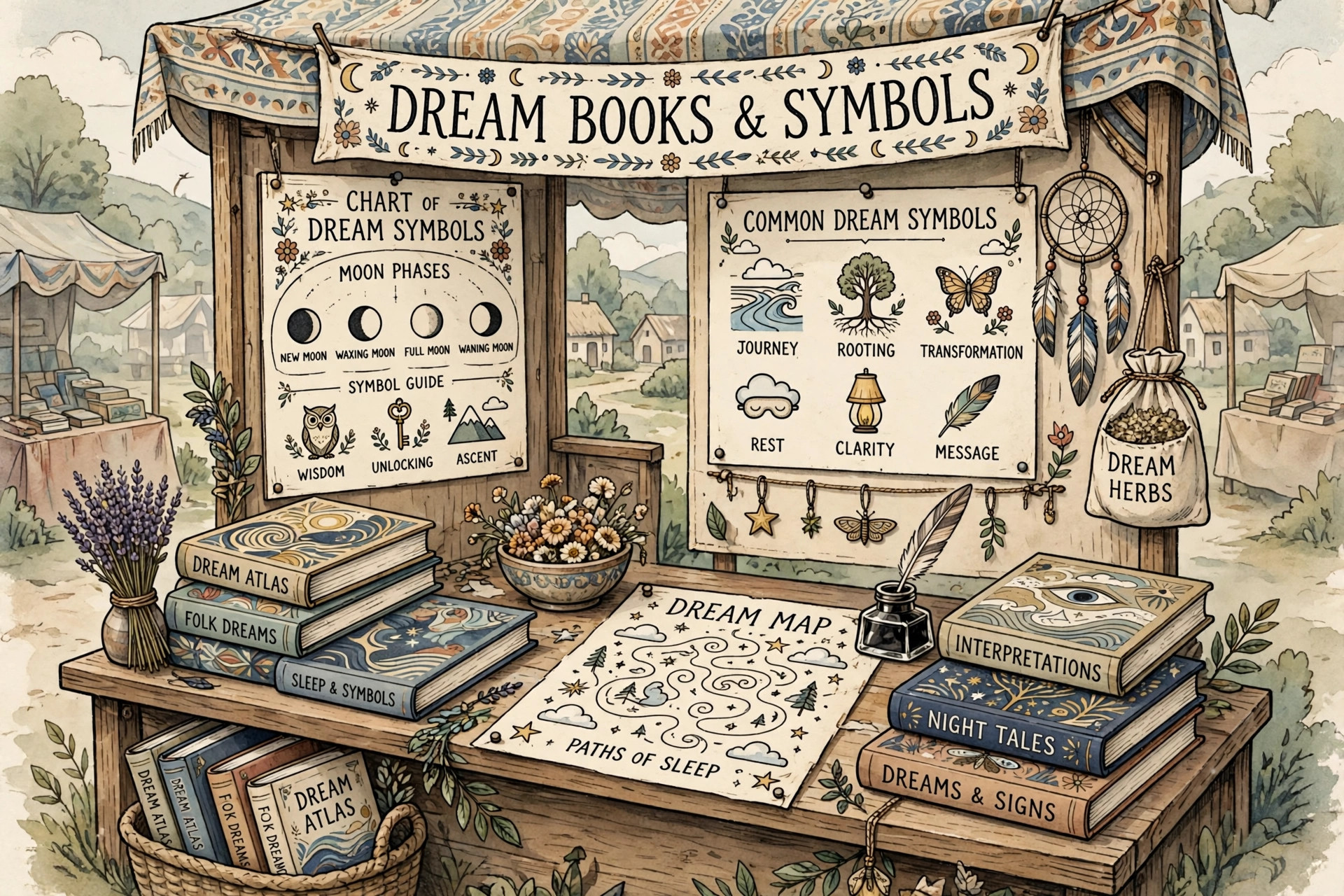
The printed side of the tradition became a small industry of its own. Booklets with titles about dreams and numbers are sold in markets across the region, sometimes alongside calendars and almanacs. Wall charts showing rows of dream images have hung in shops for generations. These are cultural artefacts as much as they are publications. Their illustrations, often hand-drawn in a distinctive folk style, show how the tradition imagines the dream world: tigers and elephants, rivers and rain, weddings and journeys, gods and ghosts.
It is worth noting that the people who buy these books are not all teer players. Many buy them out of curiosity, as souvenirs, or as keepsakes of a tradition they grew up hearing about. The books sit on the same shelf, in cultural terms, as books of folk tales and proverbs. They document how a community once spoke about dreams, even if the daily conversation around them has changed.
The Role of Elders and Storytellers
Before the booklets, there were the elders. In many families, the person to consult about a strange dream was a grandmother or grandfather who knew the old sayings. These elders rarely spoke in numbers at all. They spoke in meanings: this dream means a guest is coming, that dream means you should be careful on a journey, another means good news is on its way. The numbers were a later addition, grafted onto the older tree of dream meanings when the printed books needed a complete system.
This matters because it reminds us what the tradition really is. At its heart, teer dream folklore is not about numbers. It is about a community’s old habit of taking dreams seriously and finding meaning in them together. The numbers are the newest and thinnest layer of the tradition; the stories underneath are much older and much richer.
Why the Same Dream Gets Different Numbers in Different Books
One of the most confusing things for newcomers is discovering that dream books disagree with each other. The same dream image can be linked to one number in one booklet and a completely different number in another. Some readers find this frustrating, but folklorists find it revealing. The disagreement is proof of what the tradition actually is: a collection of local memories, not a single authoritative system.
Many Compilers, Many Lists
Every printed dream book had an author, and every author worked from their own sources. One compiler might have learned the tradition from family stories in Shillong. Another might have collected sayings from travellers passing through Jowai. A third might have simply copied an older booklet and added their own inventions. With no central authority and no original master list, variation was inevitable.
Regional differences add another layer. Meghalaya is a state of hills and valleys, and communities that live a few hours apart can have quite different folklore. An animal that is common in one valley might be rare in another, and the stories attached to it will differ. When those local stories were written into numbered lists, the numbers differed too.
What the Variation Tells Us
If dream numbers were a real system for predicting results, we would expect the books to agree, or at least to converge over time as people tested them. The opposite happened: the books multiplied and diverged. That divergence is the tradition telling the truth about itself. It is a folk art, like folk songs that change a little with every singer. Expecting all dream books to agree is like expecting every village to sing a song exactly the same way.
For the curious reader, this is actually good news. It frees you to enjoy the tradition for what it is: a colourful, creative, deeply human way of talking about dreams. You do not need to find the “right” book, because there is no right book. There are only stories, and stories are meant to be enjoyed, compared, and passed on.
Teer Dream Number Traditions in Shillong, Juwai and Khanapara
Although the basic idea is the same everywhere, the dream number tradition has local flavours in each of the main teer towns. These differences reflect the character of the places themselves: Shillong the hill capital, Juwai the Jaintia Hills town, and Khanapara the gateway town on the Assam border.
Shillong: The Capital of the Tradition
Shillong is where teer is most famous, and it is also where the dream number tradition is most visible. The Polo Ground area, where the archery takes place, has been the centre of teer life for generations. Around it grew the whole ecosystem of the game: the counters, the result boards, and the sellers of dream booklets. If you visit our Shillong teer result page, you will see how central this town is to the daily rhythm of the game.
In Shillong, the dream conversation has a particular style. Travellers often look up “shillong teer dream number” before a visit, hoping to understand the morning chatter they will hear around the counters. The city’s mix of Khasi tradition and colonial-era history gives its folklore a distinctive flavour, and the dream books sold here tend to be the most elaborate, with the longest lists of images. Visitors are often surprised by how openly dreams are discussed. In many cultures, dreams are private; in Shillong’s teer circles, they are the morning’s news.
Juwai and the Jaintia Hills
Juwai, in the Jaintia Hills to the east, has its own teer tradition and its own way of talking about dreams. The Jaintia people have distinct customs and stories, and those differences show up in the local dream lore. Some dream images that are prominent in Shillong booklets are less common here, while others that barely appear in Shillong are everyday references in Juwai.
The pace of life also shapes the tradition. Juwai is smaller and quieter than Shillong, and the dream conversation there tends to happen in tighter circles: family groups, neighbourhood gatherings, regular companions at the same counter. The folklore feels more intimate, less commercial, closer to the fireside storytelling it came from.
Khanapara: Where Two States Meet
Khanapara sits on the border between Meghalaya and Assam, near Guwahati, and its teer culture reflects that in-between position. Players and traditions flow across the border in both directions. The dream books sold around Khanapara often blend Meghalaya folklore with Assamese folk beliefs about dreams, creating a hybrid tradition. If you follow the Khanapara teer result page, you are following a game played at one of India’s most interesting cultural crossroads.
This blending is a reminder that folklore does not respect administrative boundaries. Dream stories travel with people, and wherever people gather to play teer, they bring their dreams and their dream stories with them. The result is a living tradition that keeps absorbing new material, which is exactly what living traditions do.
Common Dream Themes Across the Region
Despite local differences, certain dream themes appear in folklore across all the teer towns. Animals are the most prominent: the tiger, the elephant, the snake, and the horse appear in story after story. Water in its many forms, rain, rivers, floods, and wells, is another great theme. Journeys, houses, weddings, and encounters with elders or strangers round out the classic set. These are the images that human beings have dreamed about everywhere and always, which is why they sit at the heart of the tradition.
Notice what this list tells us about the people who made the folklore. These are the things that mattered in daily life: the animals of the forest and the farm, the water that could nourish or destroy, the journeys that could bring fortune or danger, the family events that marked the years. The dream books are, without intending to be, a portrait of life in the hills.
Reading Dream Folklore Responsibly
Because dream numbers live next door to a real lottery, it is important to say clearly how this folklore should and should not be used. This section is the responsible note that every discussion of the tradition should carry.
Folklore Is Entertainment, Not Prediction
A teer dream number is a story, not a signal. No dream image has any influence on how many arrows hit a target, and no booklet, chart, elder, or website can change that. Treating dream numbers as predictions is a misunderstanding of what folklore is for. Stories are for meaning, comfort, laughter, and community. They are not tools for forecasting random events, and using them that way leads only to disappointment.
This is also why this article contains no dream-to-number mappings. Publishing such a list would suggest that the mappings are information you can act on, when they are actually folklore you can enjoy. There are plenty of places to browse the teer result list of past declarations if you want to see real, verified results. Dreams belong in the realm of stories, and results belong in the realm of facts.
Teer Is a Legal, Regulated Lottery for Adults
Teer is a legal lottery in the state of Meghalaya, conducted under state regulation. Like all lotteries, it is strictly for adults aged 18 and above. If you choose to participate in teer, do so legally, through authorised counters, and within limits you can afford. Never borrow money to play, never chase losses, and never treat any game of chance as a source of income.
If playing stops being fun, that is a sign to stop playing. Responsible play means setting a budget before you start, sticking to it, and walking away when the entertainment ends. No folklore, no dream, and no number is worth financial distress.
Keeping the Culture Alive the Right Way
There is a genuinely good way to keep the dream number tradition alive: as culture. Ask your elders about the dreams they remember and what the old people used to say about them. Compare the stories in different booklets the way you would compare versions of a folk tale. Notice how the tradition reflects the life of the hills. Passed on in this spirit, dream folklore is a treasure. It connects the present to the past and gives young people a window into how their grandparents saw the world.

Frequently Asked Questions About Teer Dream Numbers
What is a teer dream number?
A teer dream number is a two-digit number from 00 to 99 that folklore associates with a particular dream image. According to tradition, dreaming of certain people, animals, objects, or events corresponds to a specific number. This is a folk belief, not a fact, and it has no effect on actual teer results, which are decided purely by archery.
Where did the teer dream number tradition come from?
The tradition grew out of the older dream lore of the Khasi, Jaintia, and Garo peoples of Meghalaya, where dreams were traditionally taken seriously and discussed communally. When teer became a daily event, that existing habit of interpreting dreams was adapted to the game’s two-digit result format, and compilers began publishing booklets that paired dream images with numbers.
Why do different dream books give different numbers for the same dream?
Because there was never a single original list. Each booklet was compiled by a different author from different local stories and memories, and regional folklore varies across the hills. The disagreement between books is normal for folklore and is itself evidence that dream numbers are stories rather than a system.
Is there an official or correct teer dream number list?
No. No government body, teer association, or cultural authority endorses any dream number list. Every booklet and chart is a private compilation of folklore. If you arrived here through a dream meaning teer number search hoping for one definitive list, the honest answer is that no such list exists. Anyone who claims to have the “correct” or “official” list is misrepresenting the tradition.
Can a dream number help me win at teer?
No. Teer results are determined by archery: the number of arrows hitting the target decides the number. Dreams cannot influence this process. Treating dream numbers as predictions is a misunderstanding of folklore, and no responsible source will present them as winning tips. This article deliberately contains no number mappings and no betting advice.
Is it okay to enjoy dream number folklore without playing teer?
Absolutely. Many people enjoy the tradition purely as culture: the stories, the old sayings, the beautifully illustrated booklets, and the morning conversations. You do not need to play any lottery to appreciate folklore, and enjoying it this way is the best way to keep the tradition alive.
Conclusion
The teer dream number tradition is one of the most colourful threads in Meghalaya’s cultural fabric. It began in the fireside stories of the Khasi Hills, where dreams were treated as messages worth discussing. It grew alongside teer into printed booklets and market charts, giving a hundred numbers to the whole universe of dreams. And it survives today in morning conversations at counters from Shillong to Juwai to Khanapara, where a vivid dream is still the day’s best story.
Read this way, as folklore rather than forecasting, the tradition is a delight. It tells us what mattered to the people of the hills, how they spoke about their inner lives, and how a community turns even its sleeping hours into shared culture. Enjoy the stories, honour the storytellers, and leave the numbers to the archers.