
Understanding how meghalaya teer prizes work is one of the most practical things a player can learn. Most players know how to pick a number and check the result, but fewer know what happens next when their number wins: how the payout is calculated, where to collect it, what the tax position looks like, and what to do if something goes wrong. This guide explains the prize system, the tax position in general terms, and the claiming process step by step, all within the licensed and regulated framework of the teer lottery Meghalaya runs under state law, a form of meghalaya lottery with deep local roots.

How Meghalaya Teer Prizes Work
Meghalaya teer is a licensed lottery style game built around traditional archery. Bettors choose a number from 0 to 99 that represents a prediction of the last two digits of the total number of arrows hitting the target in a round of arrow shooting. Each session has two rounds, called the first round (FR) and the second round (SR), and you can stake on either or both.
When your chosen number matches the declared result for that round, you win a prize. Unlike some lottery formats where the prize is a fixed advertised jackpot, teer prizes are calculated as a fixed multiple of your stake. The multiple is set by the licensed counter where you place your bet, and it can differ between the first round and the second round. This is an important detail: the FR prize multiple and the SR prize multiple are not necessarily the same, so always check the multiple displayed or quoted at the counter before you place your stake.
The prize system is deliberately simple. You place a stake, choose a number, and if that number wins you receive the stake multiplied by the counter’s announced rate. There is no jackpot pool that grows or shrinks, and there is no complicated prize division among winners. Every winning ticket is paid at the same multiple regardless of how many people chose the winning number.
Why Prizes Are Reliable at Licensed Counters
One of the strongest features of the meghalaya teer system is that it operates inside a licensed and regulated framework. Teer betting in Meghalaya is licensed under Section 14A of the Meghalaya Amusements and Betting Tax (Amendment) Act, 1982, which defines licensed bookmakers for arrow shooting and states that “arrow shooting” includes the game of teer. The Meghalaya Regulation of the Game of Arrow Shooting and the Sale of Teer Tickets Act, 2018 further regulates the game and the sale of teer tickets, while the Meghalaya Prevention of Gambling Act, 1970 allows the government to exempt notified games. The game is conducted under the aegis of the Khasi Hills Archery Sports Association, and the Law Commission of India (Report No. 276) discusses this framework in its section on Meghalaya.
This regulation backstop is exactly why prizes at licensed counters are reliable. A licensed bookmaker operates under rules that can be enforced, which means:
What licensing means for your payout
- A known prize multiple. Licensed counters publish or announce the payout multiple for the FR and SR rounds, so the amount you are entitled to is clear before you bet.
- A proper ticket. Every stake should come with a proper ticket showing your number, the round, the amount, and the date. That ticket is your proof of the bet and the basis of any claim.
- A regulated environment. Because the game and ticket sales are regulated by state law, players have recourse if something goes wrong, which we cover in the disputes section below.
Always place your teer bets only with licensed counters. Unlicensed operators sit outside this protective framework, and a dispute with an unlicensed operator leaves you with far fewer options. The official state legislation can be read in the Meghalaya Amusements and Betting Tax (Amendment) Act, 1982 on the Meghalaya state portal, and the broader legal context is discussed in the Law Commission of India Report No. 276, Meghalaya section.

How the Prize Relates to Your Stake
As noted above, teer prizes are a fixed multiple of the stake, set by the licensed counter. It is worth explaining a few practical points about this arrangement so there are no surprises.
The multiple is set by the counter, not the player
You do not negotiate the prize. The counter displays or states the multiple, typically as something like “X times for FR and Y times for SR” (exact figures vary by counter and we do not publish specific multipliers as fact, since they differ). If you place 10 rupees and the announced multiple for that round is, say, the counter’s FR rate, your winnings are 10 rupees times that rate. Knowing the rate before you bet lets you understand exactly what a win would pay.
FR and SR can pay differently
The two rounds of a session are separate events. Most counters apply one multiple to the first round and a different multiple to the second round. When you buy a ticket for a specific round, confirm which round the ticket is for and what that round’s multiple is. If you play both rounds, treat them as two separate bets with potentially two different payouts.
No deductions are built into the prize
The prize multiple is the headline figure. Any tax obligation on your winnings is a separate matter between you and the tax authorities, not a deduction the counter makes from your prize. This is why the tax section below matters: the full payout arrives with you, and your record keeping must cover it.
Meghalaya Teer Taxes and Your Obligations
This is the question players ask most after learning how prizes work. The honest answer is that winnings from the meghalaya teer lottery may be taxable under Indian income tax law, and the rules that apply to your specific situation can change. We describe the position only in general terms here.
General principles to understand
In India, winnings from lotteries, games, and similar activities are generally treated as income from other sources and may be subject to tax. The tax code also has mechanisms for collecting tax at source on certain winnings. Because rates, thresholds, and procedures change from year to year, and because your overall income, deductions, and filing status affect what you actually owe, no fixed rate is stated here.
What you should do
- Check the current rules. Tax rates and rules on lottery winnings change. Before the financial year ends, check the current income tax provisions or ask a qualified tax adviser how teer winnings are treated in your case.
- Keep records of everything. Your winning tickets, receipts from the counter, and a simple log of dates and amounts form the evidence you would need if you have to declare the winnings.
- Do not rely on hearsay. Counter talk and player folklore about “nobody pays tax on small wins” is not a reliable guide. The law is what matters, and it is worth five minutes of reading or one conversation with an adviser.
- Consult a professional for large amounts. If you win a significant prize, a chartered accountant or tax adviser can tell you exactly what applies and how to stay compliant.
This guide does not invent a tax rate and does not substitute for professional advice. It simply flags the obligation so you are not caught off guard.
How to Claim Your Meghalaya Teer Winnings Step by Step
Claiming a teer prize is a straightforward process, but small mistakes can cause real delays. Follow these steps in order.
Step 1 – Keep your ticket safe
Your ticket is the entire basis of your claim. Keep it in a safe, dry place the moment you buy it. Do not fold it until it is unreadable, do not write over the printed details, and do not throw away losing tickets until you are sure the claim window for that session has passed. A photo of the ticket taken at purchase is a good backup, but the physical ticket is what counters expect to see.
Step 2 – Check the result carefully
Confirm the declared result for the correct round (FR or SR) and the correct date before you go to claim. Match your ticket number against the result digit for digit. Also confirm the multiple that was announced for that round, so you know the amount you are owed. For a daily results reference, you can use the teer result list on Teer Result Now to confirm what was declared.
Step 3 – Claim at the counter where you played
Take your winning ticket to the same licensed counter where you placed the bet. Prizes are claimed at the counter, not from the archery association and not from the government. Present the ticket, confirm the amount based on the announced multiple, and collect your payment.
Step 4 – Respect the claim window
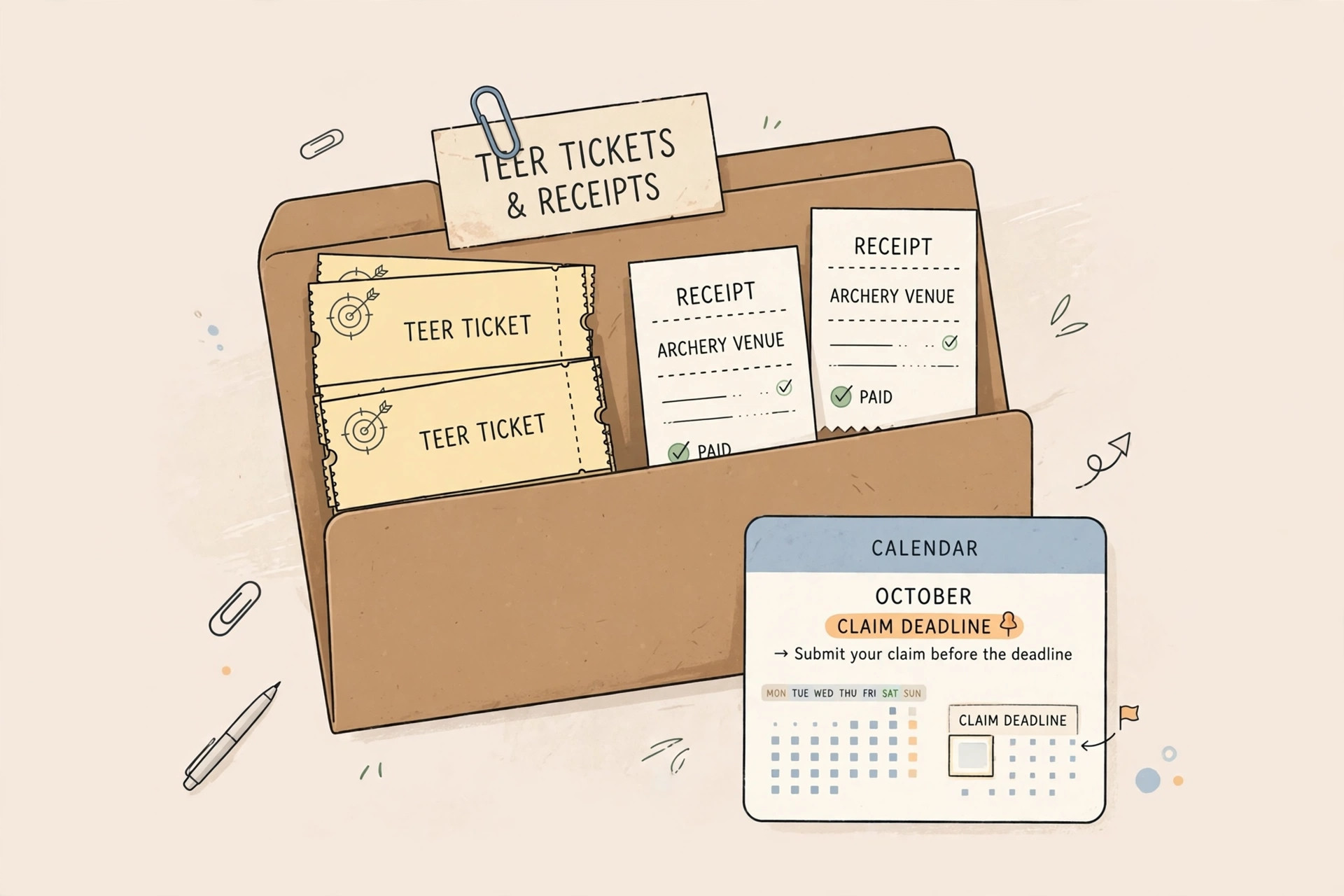
Counters have claim windows, and prizes claimed after the window closes may not be honored. The safe habit is to claim as soon as possible, ideally the same day. Ask your counter what their claim deadline policy is and treat that deadline as firm.
Step 5 – Record the payment
Note the date, the amount received, the round, and the counter in your personal log, and keep any receipt the counter gives you. This record serves both as your tax documentation and as evidence if a dispute arises later. Learn more about us and how this site works on the about us page.
What to Do If There Is a Dispute
Disputes are rare at licensed counters, but they do happen, and knowing your options in advance makes a big difference.
Common dispute situations
- The counter disputes the multiple, the round, or the amount owed.
- The ticket is damaged or the counter questions its authenticity.
- The prize is not paid within the claim window through no fault of yours.
- A result announcement is later corrected and you and the counter disagree on which declaration stands.
How to protect your position
Start with the facts on your side. Your undamaged ticket, your photo of it taken at purchase, your log of the announced multiple, and any receipt of payment are your evidence. Calmly present these to the counter and ask for the issue to be resolved at the counter level first.
If the counter will not resolve it, remember that licensed bookmakers operate under the state framework described above. The Meghalaya Regulation of the Game of Arrow Shooting and the Sale of Teer Tickets Act, 2018 and the licensing regime under Section 14A of the 1982 Amendment Act give the regulatory structure a way to reach licensed operators. You can raise the matter with the licensing authorities, and for questions about this site you can reach out through the contact us page if you need help locating official information. Keeping your records complete from the start is what makes any complaint credible.
The strongest protection against disputes remains prevention: bet only at licensed counters, keep every ticket and receipt, photograph tickets at purchase, and confirm the round and multiple before you stake.
Record Keeping Tips for Teer Players
Good records take thirty seconds per bet and can save you real trouble later. A simple system beats a complicated one.
- One envelope per week. Drop every ticket, winning or losing, into an envelope marked with the week. Keep winning-ticket receipts with the same envelope.
- A one-line log. Date, counter name, round, number, stake, announced multiple, result, and outcome. A notebook or a phone note both work.
- Photo backup. Photograph each ticket at purchase so a lost or damaged ticket is not a total loss of evidence.
- Monthly totals. At the end of each month, total your stakes and your winnings. This gives you your net position for both budgeting and tax record purposes.
- Keep records for the tax year. Do not throw records away at the end of the month. Keep them until your income tax return for that year is filed and any possible query period has passed. If you are unsure how long to keep them, ask a tax adviser.
Is Teer Legal? A Short Recap
Players searching “is teer legal” deserve a clear answer, and the facts support one. Teer betting in Meghalaya is licensed under Section 14A of the Meghalaya Amusements and Betting Tax (Amendment) Act, 1982, which defines licensed bookmakers for arrow shooting and expressly states that “arrow shooting” includes the game of teer. The Meghalaya Regulation of the Game of Arrow Shooting and the Sale of Teer Tickets Act, 2018 further regulates the game and the sale of teer tickets, and the Meghalaya Prevention of Gambling Act, 1970 provides the exemption mechanism for notified games. The game is conducted under the aegis of the Khasi Hills Archery Sports Association. That is the legal foundation on which licensed counters operate and on which prize reliability rests. Players asking about the meghalaya teer act usually mean this 2018 Regulation Act, which is the statute that directly governs the sale of teer tickets today. In short, the teer rules that protect players come from state legislation, not from the counters themselves. A plain-language discussion of this framework appears in the Law Commission of India Report No. 276, Meghalaya section. Return to the Teer Result Now homepage for daily results and more guides.
Responsible Play Note
Meghalaya teer is a legal lottery in Meghalaya for adults aged 18 and above only. Teer should be treated as paid entertainment, not as a way to earn income or recover losses. Decide your budget before you play, never stake money you cannot afford to lose, and take regular breaks. If playing stops being fun or starts affecting your finances, relationships, or work, step back and seek help from a trusted person or a professional support service. Playing responsibly keeps the game enjoyable and your records clean.

Frequently Asked Questions
How are meghalaya teer prizes calculated?
Meghalaya teer prizes are a fixed multiple of your stake, set by the licensed counter where you bet. The multiple can differ between the first round (FR) and the second round (SR), so always confirm the announced multiple for the round you are playing before you place your stake. There is no jackpot pool and no prize sharing; every winning ticket pays the same multiple of its stake.
Where do I claim my teer winnings?
Claim your winnings at the same licensed counter where you placed the bet. Bring the original ticket, confirm the announced multiple for the round, and collect your payment. Claim as soon as possible and always within the counter’s claim window.
Are teer winnings taxable in India?
Winnings from lotteries and similar games may be taxable under Indian income tax law. Rates, thresholds, and procedures change, so check the current rules or consult a qualified tax adviser about your situation. Keep your tickets, receipts, and a log of your winnings so you can declare them accurately if required.
What should I do if a counter refuses to pay my prize?
First, present your evidence calmly: the undamaged ticket, any photo of it, your record of the announced multiple, and receipts. Ask for resolution at the counter. If that fails, licensed bookmakers operate under Meghalaya’s licensing framework, including the 2018 Regulation Act and Section 14A of the 1982 Amendment Act, so you can raise the matter with the licensing authorities. Prevention is best: bet only at licensed counters and keep complete records.
Is teer legal in Meghalaya?
Yes. Teer betting in Meghalaya is licensed under Section 14A of the Meghalaya Amusements and Betting Tax (Amendment) Act, 1982, which defines licensed bookmakers for arrow shooting and states that “arrow shooting” includes the game of teer. It is further regulated by the Meghalaya Regulation of the Game of Arrow Shooting and the Sale of Teer Tickets Act, 2018, and the game is conducted under the aegis of the Khasi Hills Archery Sports Association.
Do FR and SR pay the same prize?
Not necessarily. The first round and second round are separate events, and licensed counters commonly set different prize multiples for each. Confirm the multiple for the specific round on your ticket so you know exactly what a win pays.
How long should I keep my teer tickets and records?
Keep every ticket, receipt, and your betting log at least until your income tax return for that financial year is filed and any possible query period has passed. If you are unsure of the exact period, ask a tax adviser. Monthly totals of stakes and winnings also help with budgeting and compliance.
Conclusion
The meghalaya teer prize system is straightforward by design: a fixed multiple of your stake, set by the licensed counter, paid on a winning ticket with the correct round and date. Its reliability comes from the licensing framework of Meghalaya law, which also gives players somewhere to turn when disputes arise. Your side of the bargain is simple too: keep your tickets, confirm the multiple and claim window, claim promptly at the counter, keep clean records, and check the current tax position or ask an adviser when in doubt. Played that way, teer stays what it is meant to be, a legal, regulated pastime for adults, and your winnings stay a pleasure rather than a paperwork problem.