
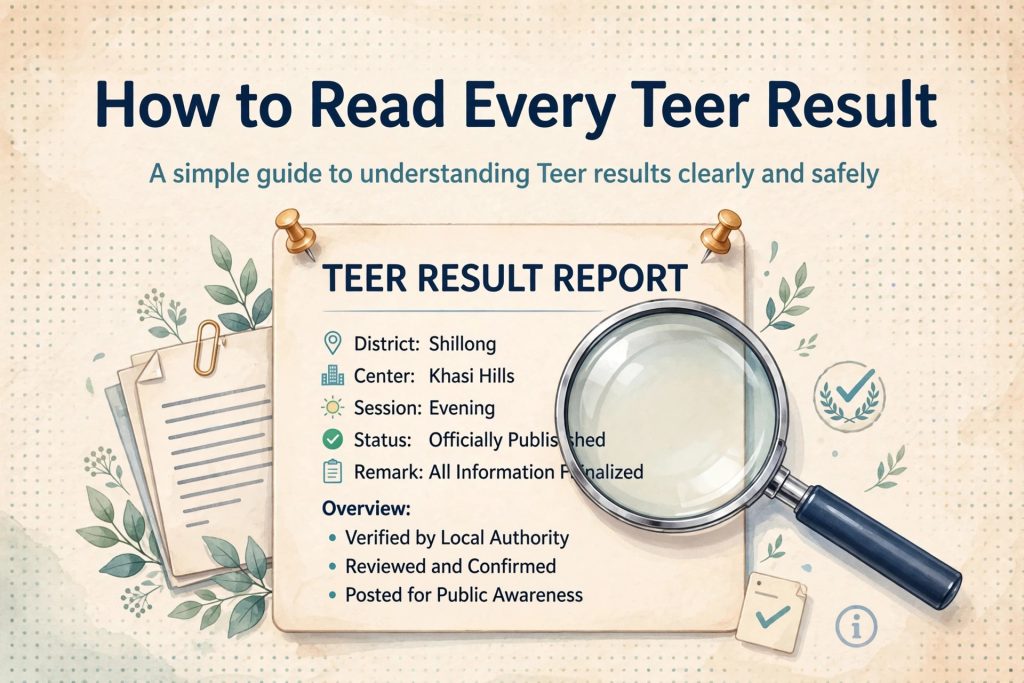
Reading a teer result card takes five seconds once you know what each part means, but beginners often spend much longer because they have never been taught the layout. This guide teaches you to read any card in the morning teer vs day teer system with total confidence. You will learn the anatomy of a result card, what FR and SR stand for, how to use the date and time stamps, what a dash means, and how the session label tells morning and day apart. By the end, every card on every teer portal will be instantly readable to you.
Why Reading Skills Matter in Morning Teer vs Day Teer
The morning teer vs day teer system puts twelve daytime round results on a single page every day: six from the morning session and six from the day session. Each result is a two digit number, and the numbers from different sessions look identical. A value shown on a morning card and the same value shown on an afternoon card are visually the same digits, so both are examples only and never real results. Only the card around the number tells you which session it belongs to.
This is why reading skill matters more than memorising timetables. Timetables tell you when to check. Reading skill tells you what you are looking at once you arrive. A follower with good reading habits never confuses sessions, even on a brand new website with an unfamiliar layout, because the anatomy of result cards is standard across the teer web.
Anatomy of a Teer Result Card
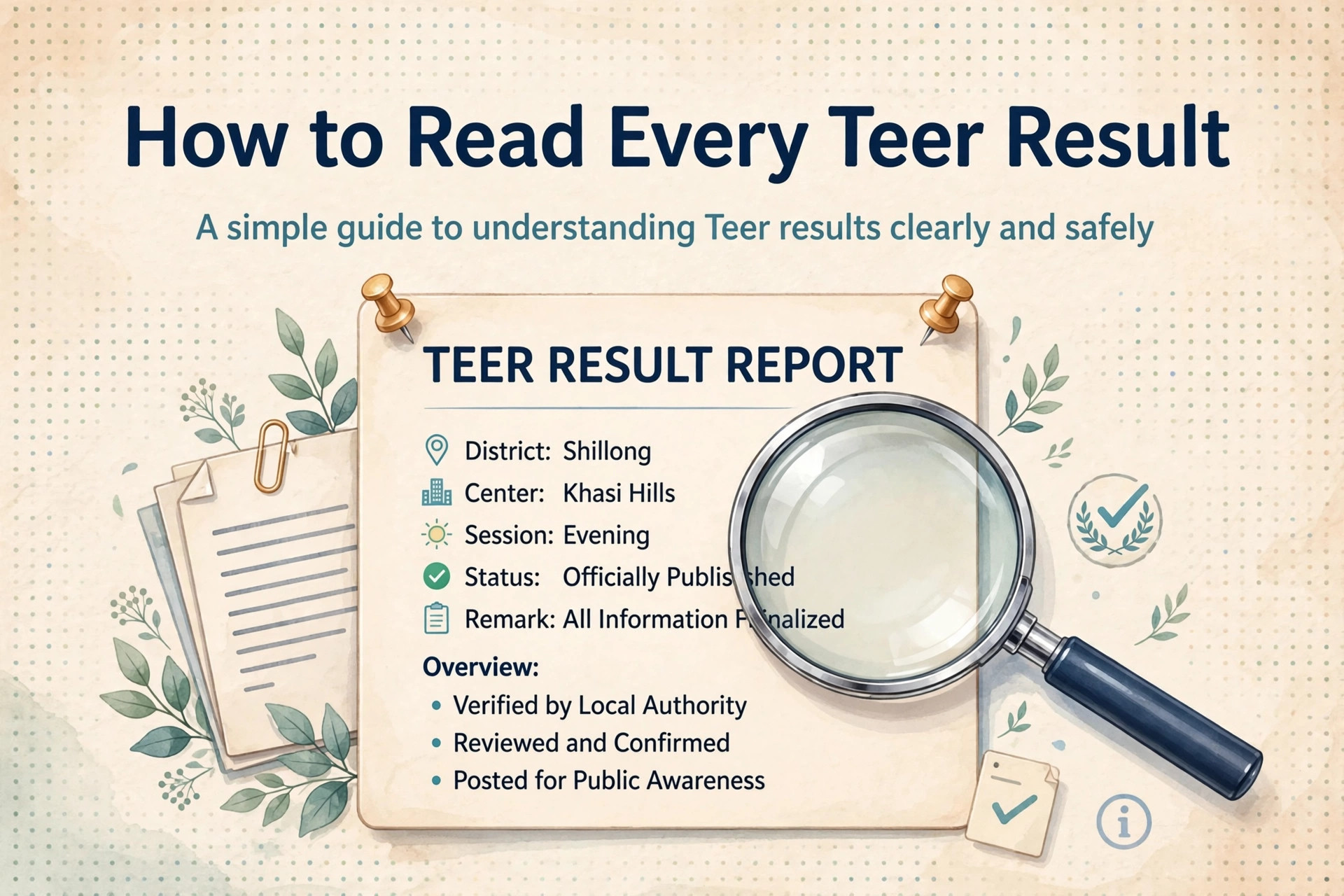
Every result card, whether it belongs to the morning session or the day session, contains the same five elements. Learn them once and you can read any card.
Element one is the card title. This is the full market and session name, such as Shillong Morning Teer or Shillong Teer. The title is the single most important element on the card because it identifies both the centre and the session. More on this below.
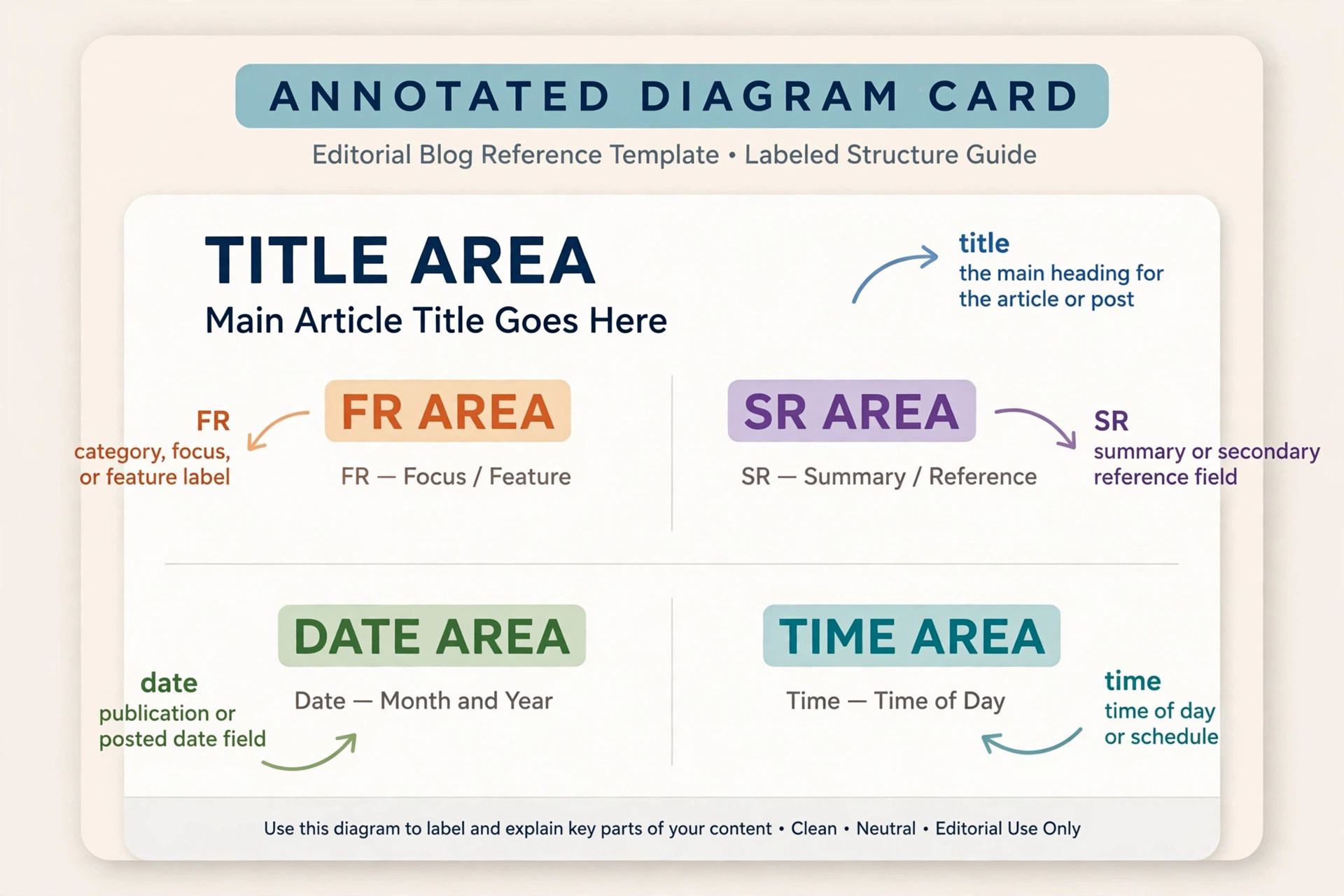
Element two is the FR value. FR stands for first round. This is the two digit number declared after the first archery round of that market’s session. It appears first chronologically.
Element three is the SR value. SR stands for second round. This is the two digit number declared after the second archery round. It appears after the FR value.
Element four is the date. This tells you which day the result belongs to. Always read it, because comparing numbers across different dates is one of the most common beginner errors.
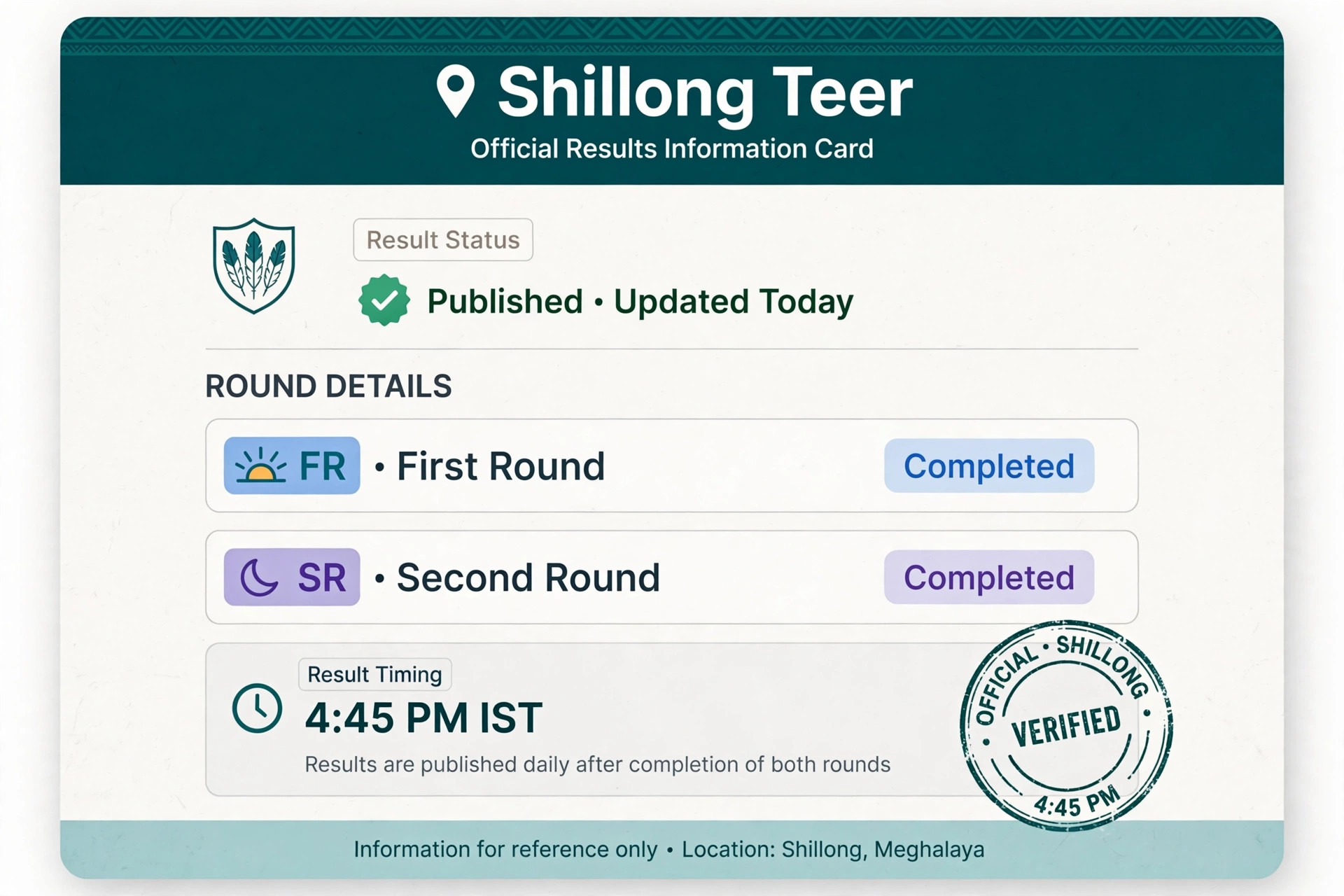
Element five is the declaration time. Good portals stamp each card with the time the result was confirmed, for example 11:30 AM or 4:45 PM. The time stamp is your backup session identifier: morning stamps fall before noon, day stamps fall in the afternoon.
Some cards also show a small status area where pending rounds display a dash instead of a number. The dash is the sixth element to understand, and it simply means the round has not been declared yet.
Reading Morning Session Cards
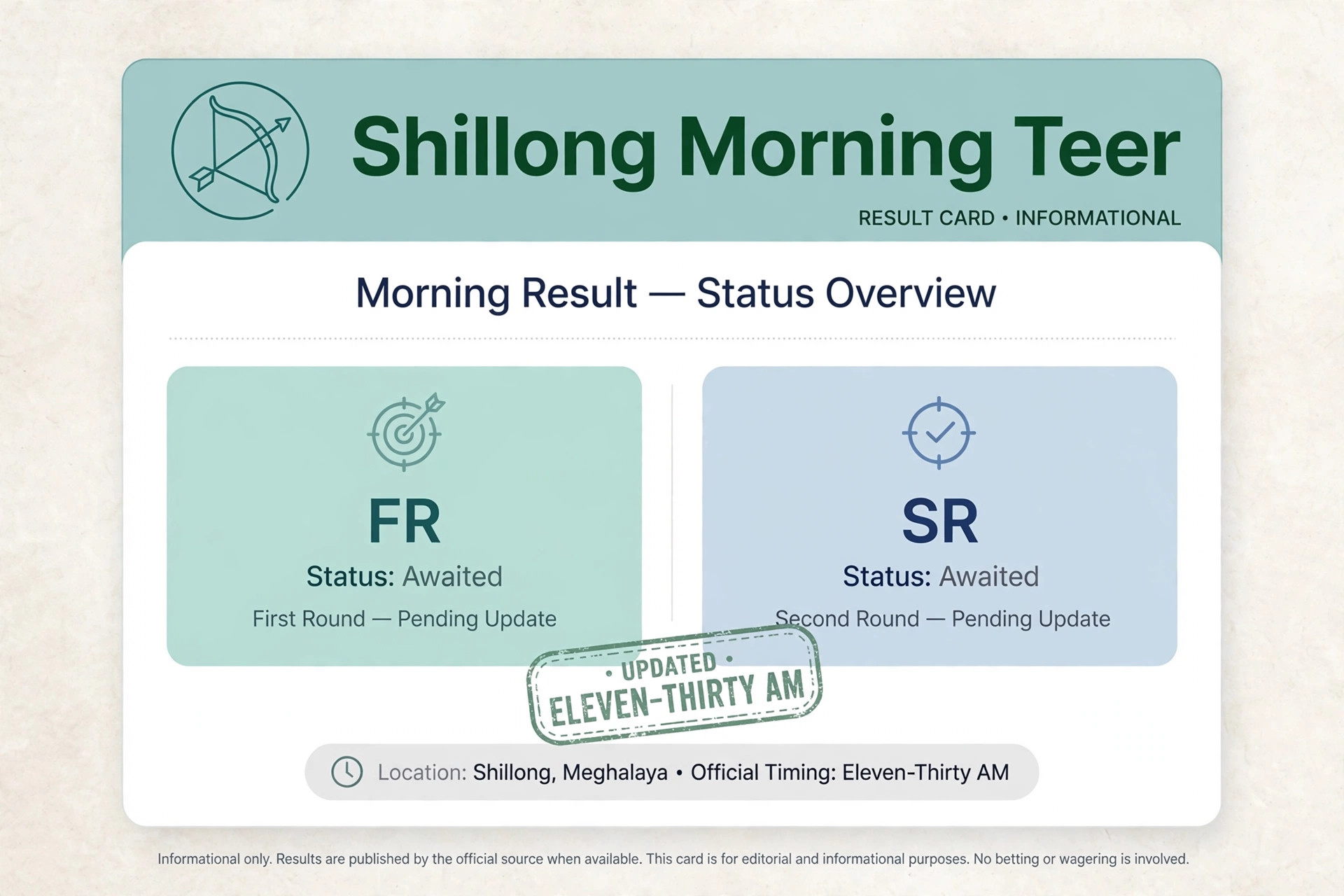
Morning session cards are the three cards titled Shillong Morning Teer, Juwai Morning Teer, and Khanapara Morning Teer. The word Morning in the title is your identification key.
Here is how to read one, step by step. First, read the title and confirm it says Morning. Second, look at the FR value. If it shows two digits, the first round is declared. If it shows a dash, the first round is still pending, which is normal before about 10:30 AM. Third, look at the SR value with the same logic; dashes before about 11:30 AM to 12:00 PM are normal. Fourth, confirm the date matches today. Fifth, glance at the declaration time to double check that it falls in the morning window.
A completed morning card reads like a finished story: title with Morning, two two-digit numbers, today’s date, and a late morning time stamp. An incomplete morning card, with one or two dashes, is simply a story still being written. Both are normal at different hours.
The three morning markets declare on slightly different schedules. Shillong Morning Teer and Juwai Morning Teer usually finish around 11:30 AM Indian Standard Time, while Khanapara Morning Teer usually finishes around 12:00 PM. So at 11:45 AM you might see two complete morning cards and one card still waiting on its SR. That staggered pattern is expected, not a malfunction.
Reading Day Session Cards
Day session cards are the three cards titled Shillong Teer, Juwai Teer, and Khanapara Teer, without the word Morning. The absence of the word Morning, combined with an afternoon time stamp, is your identification key.
Read them with the same five step method. Confirm the title has no Morning in it. Check the FR value, then the SR value, treating dashes as pending. Confirm the date. Check the declaration time falls in the afternoon window.
The day session unfolds more gradually than the morning session. Juwai Teer usually declares around 2:30 PM and 3:10 PM, the main Shillong Teer around 3:45 PM and 4:45 PM, and Khanapara Teer around 4:20 PM and 4:50 PM. This means a day card can sit half complete for a while, showing its FR number while the SR still shows a dash. That half complete state is the most misread card layout in all of teer. Beginners see the FR number, assume the card is finished, and later wonder why the numbers seem to have changed. The card did not change its FR; it simply added its SR when the second round was declared. Always check whether both rounds are present before treating a card as final.
The main Shillong Teer card deserves special attention because it is the most viewed card in teer. Its FR around 3:45 PM and SR around 4:45 PM make it the headline result of the day. When you read this card, apply the full method carefully: title without Morning, both rounds confirmed, date checked, afternoon stamp verified.
The Session Label: The Most Important Word
In the entire morning teer vs day teer system, one word carries more meaning than any number: the session label. Morning in the title means the late morning session. No session word, in the context of the daytime cards, means the afternoon day session.
Train yourself to read the label before the numbers. It takes a fraction of a second and prevents the single most common error, which is reading a morning number as a day number or vice versa. The centres repeat across sessions, Shillong, Juwai, and Khanapara each appear twice daily, so the centre name alone never identifies the session. Centre plus session label together give you the complete address of every result.
Result portals help you by keeping card order fixed. On a well designed homepage, the morning cards always appear in the same positions and the day cards in theirs. Once you learn the layout of your favourite portal, your eyes go straight to the right card. The homepage of Teer Result Now keeps this fixed order with declaration times on every card, which makes session identification automatic.
What Dashes Really Mean
The dash deserves its own section because it causes more confusion than any other symbol in teer.
A dash means one thing only: this round has not been declared yet. It is not an error, not a missing result, and not a sign that something went wrong. It is a schedule marker.
Dashes follow the timetable faithfully. In the morning, day session cards show dashes because their rounds happen in the afternoon. Around midday, morning cards are complete and day cards are full of dashes, which is exactly correct. In the late afternoon, the pattern reverses in meaning: any remaining dash on a day card means that specific round is still going through shooting, counting, or verification.
There is one more dash pattern to recognise: the full day dash. On Sundays and some holidays, teer is not held, and every card shows dashes for every round. This is not a delay. It is a scheduled break, and no numbers will appear later for that day.
When you see a dash, ask two questions. First, is the round’s usual time window still in the future? If yes, the dash is expected. Second, is today a teer holiday? If yes, the dash is the whole story. Only if the answer to both is no should you check back later for a delayed declaration.
Date and Time Stamps: Your Verification Tools
The date and time stamps on a card are your verification tools, and using them takes one second.
The date confirms the day. Teer results are daily, and yesterday’s numbers are irrelevant to today’s reading. Always confirm the card shows today’s date before noting any number. This is especially important in the morning, when yesterday’s day session numbers are still fresh in your memory and easy to confuse with today’s morning numbers.
The time stamp confirms the session. A stamp of 11:30 AM can only belong to the morning session. A stamp of 4:45 PM can only belong to the day session. When the title and the stamp agree, your reading is certain. On the rare occasion that a card’s layout confuses you, the time stamp resolves it instantly.
Make it a rule: no number gets written down without its date and its session label. This single rule eliminates nearly all reading errors.
Reading Archived Results
The same skills apply to archive pages, where past days are stored. On the teer result list page you can browse previous days, and each archived day shows the same card layout with the same session labels. Archives are excellent for practising your reading because there is no time pressure: every card is complete, every dash is resolved, and you can study the full daily pattern at leisure.
When reading archives, notice how consistent the structure is. Every day has the same six daytime cards in the same order with the same format. This consistency is what makes teer results easy to follow once the initial learning curve is passed. The system never changes its layout; only the numbers change.
Archives also reveal the rhythm of the week. You will spot the Sunday gaps where no sessions ran, and you may notice occasional holiday gaps. Recognising these patterns in the archive prepares you for them in live checking.
How Morning Teer vs Day Teer Compare for the Reader
As a reader, the practical difference between the sessions is pace. Morning cards complete quickly in a burst before lunch. Day cards complete gradually through the afternoon. Your reading method does not change, but your checking schedule does: one well timed morning visit covers the morning session, while the day session rewards two or three afternoon visits if you want to watch it unfold live.
The reading difficulty is identical. Neither session’s cards are harder to read than the other’s. The format is standard, the labels are clear, and the stamps are informative. Any confusion comes from rushing, not from the cards themselves.
It is also worth remembering the context of what you are reading. Teer is a legal lottery in Meghalaya for adults aged 18 and above, based on the traditional sport of archery. You can learn about the sport’s heritage on Wikipedia’s archery page. The cards you read are the public face of that regulated tradition, published round by round for followers to check.
Which Session Suits Your Checking Style
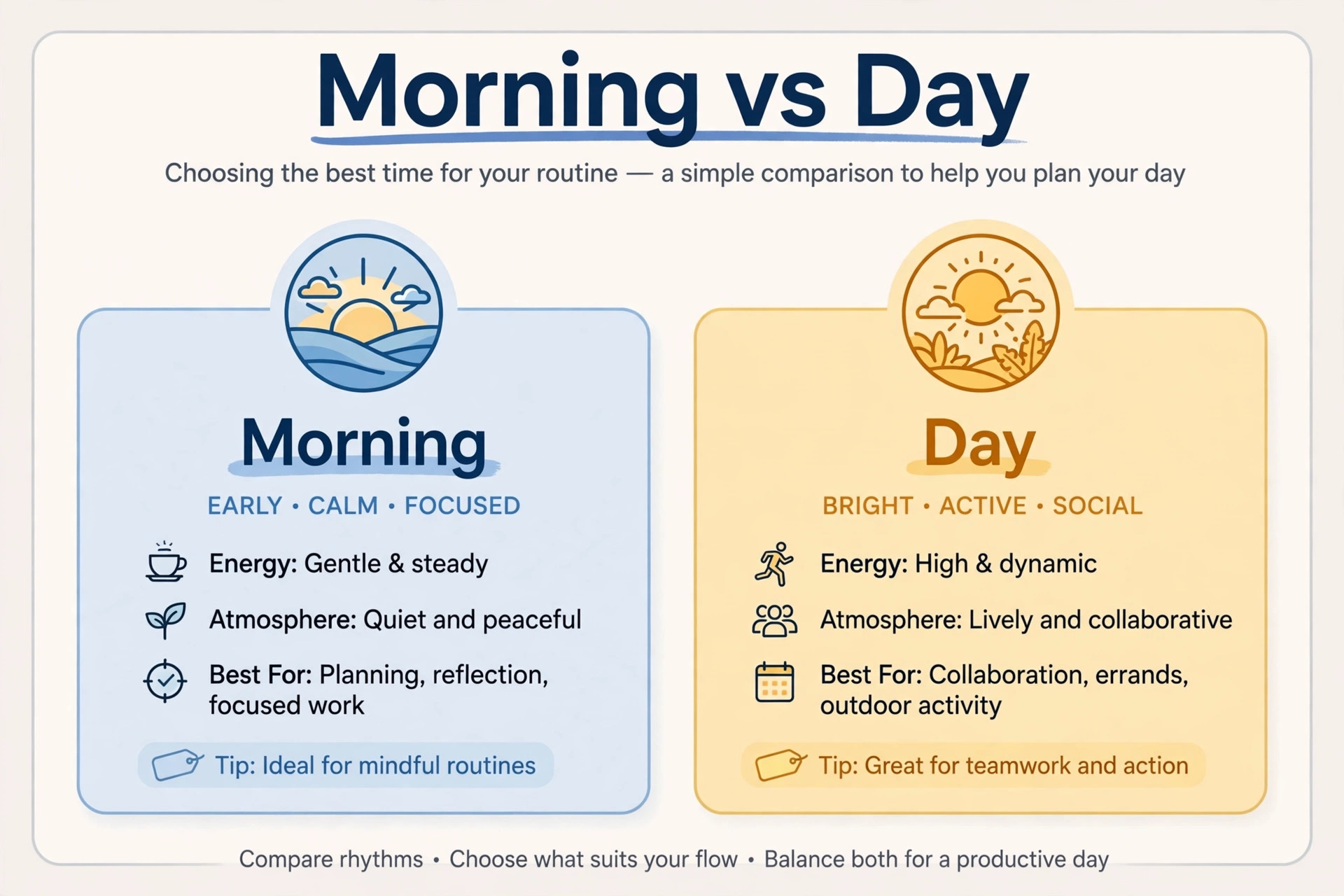
In the morning teer vs day teer comparison, neither session is better, but they suit different daily routines. The morning session is a burst: all three markets finish before lunch, so one well timed visit around midday gives you the complete picture. If you prefer a single quick check each day, the morning session is the efficient choice, and you can spend two minutes reading three finished cards.
The day session is a slow unfold. Juwai declares first, then the main Shillong rounds, then Khanapara, spread across the afternoon. Followers who enjoy watching results arrive prefer to visit two or three times, catching each market as its cards complete. If you like the rhythm of checking in through the afternoon, the day session rewards that habit, and the main Shillong card around the late afternoon is the natural headline moment.
Whichever session you follow, the reading method never changes. Title first, then FR, then SR, then date, then time stamp. Build the five step habit on one session and it transfers perfectly to the other, because every card on every teer portal shares the same anatomy.
A Sixty Second Reading Drill
Test your new skills with this drill. Open any teer homepage and pick a card at random. In sixty seconds, answer these five questions: what is the full card title, does it belong to the morning or the day session, are FR and SR both declared, what date does the card show, and what time stamp does it carry? If you can answer all five without hesitation, your reading is solid. Repeat the drill with a card from the other session. Doing this once is enough to lock in the habit, because the card layout never changes from site to site.
Frequently Asked Questions
How do I tell a morning card from a day card?
Read the card title. Morning cards include the word Morning, as in Shillong Morning Teer. Day cards use the market name alone, as in Shillong Teer. The declaration time stamp confirms it: morning stamps fall before noon, day stamps fall in the afternoon.
What does it mean when only FR is filled and SR shows a dash?
It means the first round has been declared and the second round is still pending. This half complete state is normal, especially in the day session where rounds are spaced apart. Wait for the second round’s usual window, then check again. Do not treat the card as final until both rounds show numbers.
Why do day cards show dashes in the morning?
Because the day session rounds happen in the afternoon. Dashes on day cards before about 2:30 PM are completely expected. The morning session cards are the ones to read at that hour.
How do I know a result is for today and not yesterday?
Read the date printed on the card. Every card carries its date alongside the numbers. Never note a number without confirming its date, particularly in the morning when yesterday’s afternoon results are still fresh in memory.
What is the difference between FR and SR?
FR is the first round and SR is the second round. Each market in each session holds two archery rounds daily, and each round produces its own two digit number. Both rounds are independent; the SR number is not derived from the FR number.
Where can I practise reading archived results?
The teer result list archive shows past days with complete cards for every session. It is ideal for practising because every round is resolved and you can study the full daily pattern without time pressure. For live cards, the Teer Result Now homepage keeps all sessions in fixed order.
What should I do if a card looks wrong or unfamiliar?
Slow down and apply the five step method: title, FR, SR, date, time stamp. In almost every case, the card is fine and the confusion was rushing. If a card truly looks broken, such as a title that does not match any known market, check the portal’s other pages or try again later rather than guessing.
Conclusion
Reading teer results is a small skill with a large payoff. Learn the five elements of a card, respect the session label, understand the dash, and verify with date and time stamps, and the entire morning teer vs day teer system becomes transparent. Morning cards tell their story before lunch, day cards tell theirs through the afternoon, and your job as a reader is simply to match each number to its correct session, round, and date. Practise on the archive, build the habit on live cards, and keep Teer Result Now bookmarked for the daily check. Five seconds per card is all it will ever take.
Teer is a legal lottery game in Meghalaya for adults aged 18 and above only. Please play responsibly.